We define senespan as
The extra good years — vitality, play, and disease resistance — a dog gets when we reduce the burden of cellular senescence.
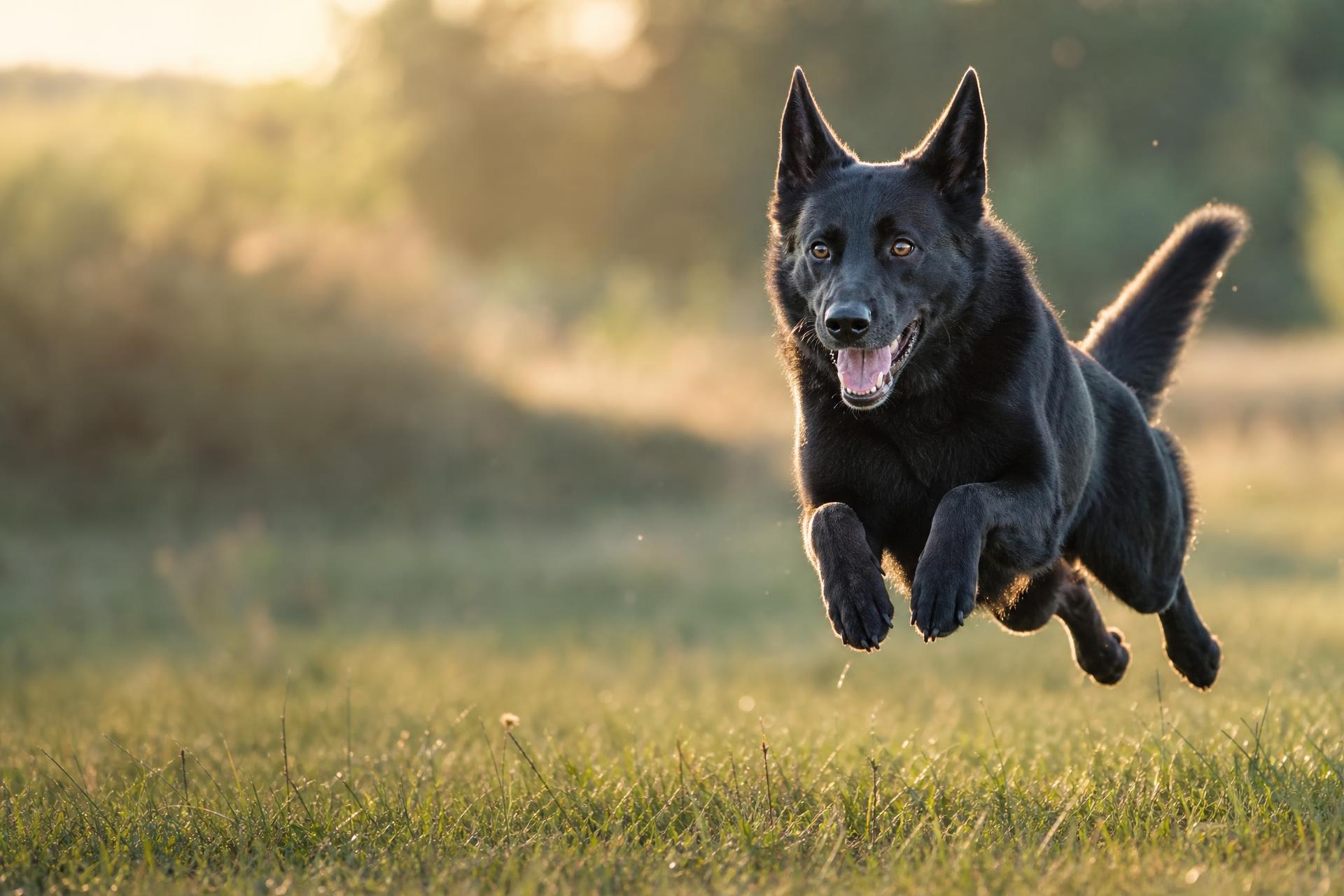
Veterinary Biotech · Cellular Senescence
We're advancing senolytic science — clearing the damaged "zombie" cells that drive aging, cancer, and decline — to extend the healthy years of every dog.
Preclinical stage · Building our founding team and scientific advisory board.
What we're building
A program-related investment of the Amaruq Foundation. "The only fault a dog truly has is that their lives are far too short." — Agnes Sligh Turnbull.
Senespan is a veterinary biotech company focused on cellular senescence — the accumulation of damaged "zombie" cells that drive aging, cancer, and decline in older dogs.
We define senespan as
The extra good years — vitality, play, and disease resistance — a dog gets when we reduce the burden of cellular senescence.
Our mission is simple: more good years. More play. More walks. More time.
The Science
As dogs age, senescent cells build up in their tissues, secreting inflammatory molecules that contribute to cancer, frailty, and organ failure. Senolytics are a class of therapeutic compounds designed to selectively clear these senescent cells, with the goal of restoring healthier tissue function and delaying age-related disease.
At Senespan, we are:
The dog longevity field is advancing on multiple fronts — companies like Loyal are pursuing metabolic and growth-hormone pathways with strong scientific backing and significant capital behind them, and the Dog Aging Project is generating population-scale data on how genetics, environment, and lifestyle shape canine aging. We have enormous respect for this work and see it as complementary, not competing.
Our specific focus is on senescence and senolytics because we believe — based on where the science currently stands — this is one of the highest-leverage mechanisms available today for extending healthy years in dogs. Senolytic approaches are grounded in over a decade of human oncology and aging research, giving us a substantial scientific foundation to adapt rather than build from scratch. We are not claiming this is the only path to canine longevity — we believe it is the most promising one for us to pursue right now, with the tools, science, and team we can bring to it.
A new way to talk about a dog's life
Longevity science has given us useful language for thinking about a good life. In human longevity science, gerontologist Dr. Kerry Burnight — author of the bestselling book Joyspan — has proposed a third, essential dimension. We think this concept applies just as powerfully to dogs, and we're glad to build on her work as we think about what a truly good long life looks like for a dog.
How long someone lives.
How many of those years are lived free of disease and disability.
The well-being and satisfaction experienced across a long life, not just its biological health.
Dr. Kerry Burnight
The extended period of vitality and disease resistance a dog experiences as a result of reducing the burden of cellular senescence.
Ours
Put together: we want dogs to have a longer lifespan, a longer healthspan, more joyspan — and we believe advancing the science of senescence, their senespan, is one of the most promising ways to get there.
What more time could look like
One dog. One walk. A lifetime — and what a few more good years could look like.
An illustrative projection. No German Shepherd is documented to have lived 18 healthy years; the later ages shown are an aspirational scenario, not a claim of outcome.
The average life expectancy of a pet dog is 10 to 12 years. Lifespan varies based on adult size, physical traits and a host of other factors but generally looks like: · Small breeds (e.g., Chihuahuas, Toy Poodles, Yorkshire Terriers): 12 to 16+ years. · Medium breeds (e.g., Beagles, Border Collies): 10 to 14 years. · Large breeds (e.g., German Shepherds, Golden Retrievers): 10 to 12 years. · Giant breeds (e.g., Great Danes, Mastiffs): 6 to 10 years. Imagine extending healthy lifespan by up to 50% — an aspirational target grounded in the 17–36% median gains already seen in senolytic studies in other species — For a German Shepherd (our founder James' current dog) that's 5 to 6 more years. Five or six more birthdays. Five or six more years of walks, play, and the everyday joy of having your dog beside you.
That's what we're working toward.
This is an illustrative scenario based on a target healthspan extension, not a guarantee of any specific outcome.
Interactive model
Pick your dog's breed and adjust the protocol to see how senolytic therapy could shift its lifespan and healthspan.
95th percentile. Ceiling barely moves — the compression signature.
Years before frailty onset.
Share of cohort still living at each age. Dashed verticals mark median age at death.
Where deaths concentrate. The treated peak shifts right and narrows — mortality compression.
Deaths cluster into a tighter window near the end of life.
Baseline life tables
Breed median lifespans come from McMillan et al. 2024 (Scientific Reports), the RVC VetCompass study of 584,734 UK dogs across 155 breeds. Survival is modeled with a Gompertz hazard, h(t)=α·e^(βt), calibrated so each breed's modeled median matches its VetCompass value; giant breeds carry a larger β (steeper, earlier mortality), consistent with Teng et al. 2022 life tables.
Senolytic effect
Dasatinib + quercetin senolytics raised median post-treatment survival by 36% in aged mice with only a small maximum-lifespan gain (Xu et al. 2018, Nature Medicine); across studies median gains run 17–36% (Kowald & Kirkwood 2021). We model this as a rightward shift of the mortality curve plus an increase in β post-intervention — the mortality-compression mechanism — so median and healthspan rise far more than the maximum-lifespan ceiling.
Inputs
Dosage timing maps to the 17–50% headline range (50% is the aspirational Senespan target). Intervention age applies a quadratic penalty for late starts, reflecting that senolytics work best before heavy senescent-cell accumulation. Stress factor scales the individual's baseline hazard.
Research and planning tool for Senespan. Projections are illustrative models built on published rodent senolytic data extrapolated to canine life tables — not veterinary guidance or a claim of efficacy in dogs.
Why this matters to us
Senespan is a program-related investment of the Amaruq Foundation, founded by James and Elisabeth Drage after the loss of their dog Amaruq to osteosarcoma. They have personally experienced losing dogs to cancer twice, watching a beloved dog face a disease that current veterinary medicine could manage but not meaningfully delay. While exploring what would eventually become Senespan James said "I'm not a scientist who found an interesting research gap. I'm a person who would have paid a million dollars for more time with my dog, and who felt the ceiling of what even close to unlimited money and love and medicine can currently do, and who decided to go build the thing that didn't exist yet."
That experience is part of why Senespan exists: we believe there is real, achievable scientific opportunity to extend the healthy years dogs have with the people who love them — and we're building the company to pursue it seriously.
Who's building this
Founder
Founder. Venture capitalist and operator (Exponential Ventures); building Senespan after losing his dogs to cancer.
Founder
Co-founder, Amaruq Foundation.
Advisory board forming
We're assembling a scientific and clinical advisory board now. If you work in cellular senescence, veterinary oncology, or translational longevity, we want to talk.
Join us in building SenespanWho we're for
If you want your dog to have more good years — not just more years — Senespan is being built for you.
If you're interested in clinical research, early access, or evidence-based longevity protocols, we'd love to connect.
If you're working on senescence, oncology, or longevity and want to explore canine applications, let's talk. We're also assembling our founding team and advisory board now — if you want to help build Senespan, not just follow it, reach out.
Common questions
Cellular senescence is the buildup of damaged cells — sometimes called "zombie cells" — that stop functioning properly but don't die off as they should. As these cells accumulate with age, they release inflammatory molecules that contribute to cancer, frailty, and organ decline in older dogs.
Senolytics are a class of therapeutic compounds designed to selectively clear senescent cells from the body. Senolytic research is well established in human aging and oncology science; Senespan is adapting this science specifically for canine biology.
Senespan is a term we've coined for the extended period of vitality and disease resistance a dog experiences as a result of reducing the burden of cellular senescence. It's related to, but distinct from, lifespan (how long a dog lives) and healthspan (how many years are lived free of disease).
We have deep respect for the work being done across the dog longevity field, including Loyal's pioneering work on metabolic and growth-hormone pathways and the Dog Aging Project's population-level research. Senespan's specific focus is on cellular senescence and senolytic therapies — a mechanism we believe offers some of the highest-leverage scientific opportunity available today for extending canine healthspan.
Senespan is pursuing therapeutic drug development, following established veterinary regulatory pathways, rather than a consumer supplement.
Senespan is in the early development and drug candidate identification phase. We are adapting proven human senolytic and oncology science specifically for dogs and building toward a rigorous clinical study design.
Our vision
"Old age" in dogs arrives later and gentler.
Cancer and age-related decline are delayed, not accepted as inevitable.
Pet parents talk about their dog's senespan the way we now talk about healthspan and lifespan.
Senespan is our name for this new category: dog years, reimagined.
Build with us
Advisors, scientists, and operators — this is a different conversation than our pet-parent updates. Tell us how you'd like to be involved.
Stay in the loop
If you'd like updates on:
…join the Senespan early list.